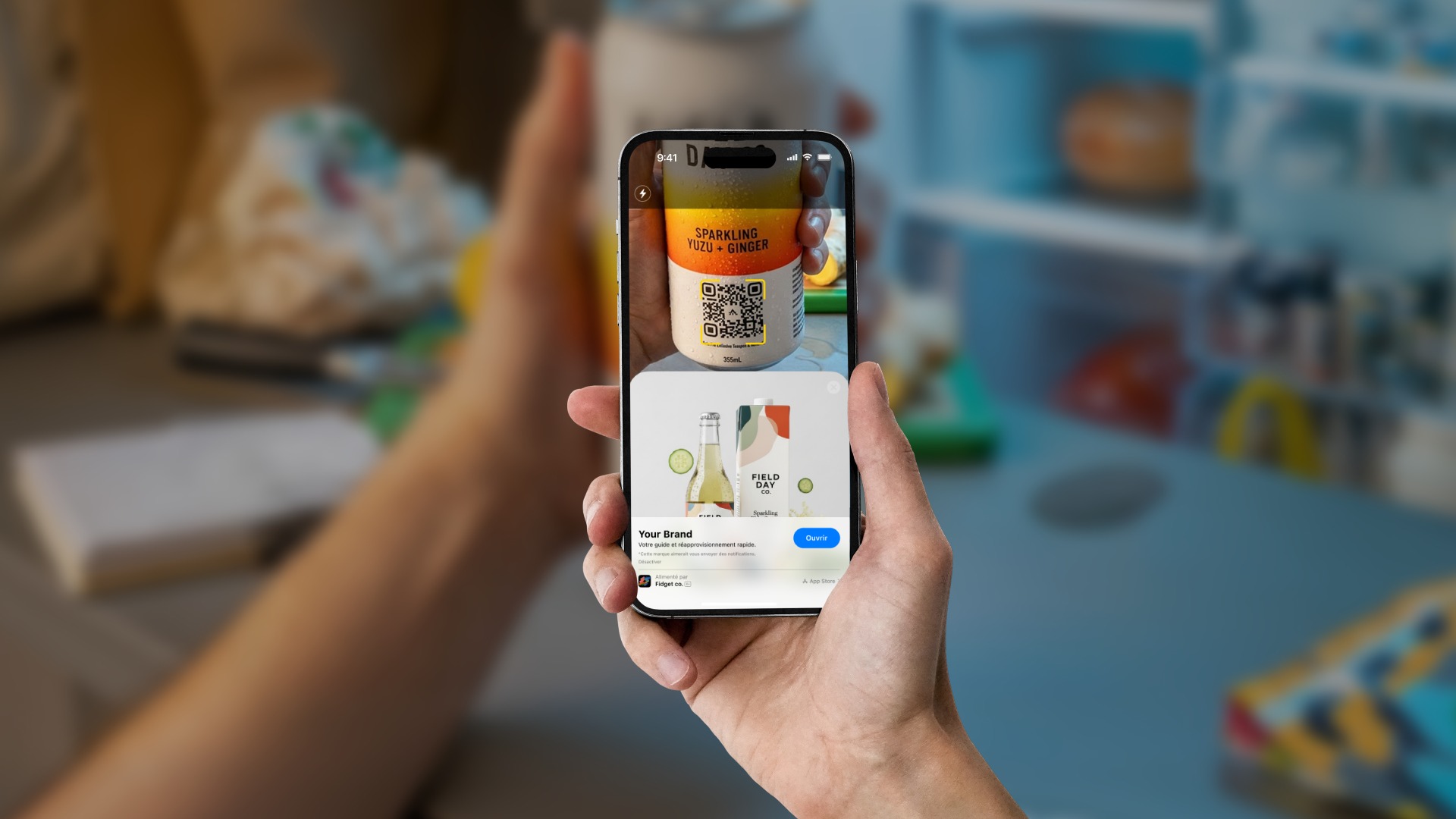
Most packaging, point-of-sale signage, and retail media units already carry a QR code or an NFC tag. What is missing is rarely the surface. It is what happens in the two or three seconds after someone scans it. This playbook walks through how brands and agencies plan a connected product experience end to end: choosing a surface, designing the moment of intent, linking it to a real destination, and measuring what the scan actually produced.
Why packaging is becoming a channel
Shelf space, packaging, and the media around it are some of the few surfaces a brand fully owns. A retailer can change a product detail page or a search ranking overnight. A brand cannot easily change its own carton, but it can change what that carton opens. As more categories adopt 2D codes and GS1 Digital Link, those owned surfaces are becoming a real channel, not just a compliance requirement.
What a connected product experience actually is
A connected product experience is a mobile journey, usually an App Clip on iOS or branded mobile web on Android, that opens instantly when a shopper scans a surface the brand owns. It is built for one moment and one job, unlike a full site a visitor has to navigate.
- Product education: ingredients, usage, care, origin, or how-to content
- Recipes and routines that turn a single product into repeated use
- Guided selection: a short quiz or finder for categories with real comparison or confusion
- Registration and warranty capture for appliances, tools, and premium goods
- Reorder and refill paths back to a retailer or direct purchase
- Offers and rewards tied to a specific campaign, sample, or retail placement
Choosing the surface: QR codes and NFC
Most launches start with a QR code because it works with the camera every shopper already has and prints cleanly on packaging, shelf talkers, out-of-home, and direct mail. NFC adds a tap-to-open option on packaging and in-store fixtures where it is supported. Neither surface is the product. Both are the trigger for the experience that opens after the scan, so the choice comes down to where the surface lives and how the shopper is likely to interact with it.
Designing the moment of intent
The strongest connected experiences treat the scan as a moment of intent, not a landing page. The shopper already made a decision to engage; the experience should reward that decision in under a second, with one clear next step instead of a menu of options.
The scan is the easy part. The experience that opens next is where a brand earns the second look.
Linking through GS1 Digital Link
As packaging moves toward 2D codes, GS1 Digital Link gives a brand a structured way to route a single code to different destinations depending on context, while staying compatible with point-of-sale scanning where supported. Where it is configured, the same code that a shopper scans for an experience can also carry the standard product identifiers retailers and partners rely on, so the brand is not maintaining two separate code strategies.
Measuring what happens after the scan
Surface-level performance only means something once it is tied to what a shopper actually did inside the experience, not just whether the code was scanned. Configured journeys can capture permission-based signals at each step, which is what turns a single campaign into evidence for the next one.
- Which surface drove the scan: package, shelf, out-of-home, direct mail, or retail media
- What the shopper did once the experience opened, not only that it opened
- Where supported, whether the visit led to an offer claim, registration, or reorder
- How performance compares across SKUs, markets, or campaign waves
Starting with a single pilot
Brands that get the most out of connected packaging tend to start narrow: one SKU, one surface, one clear job for the experience to do. That keeps the creative, legal, and measurement decisions small enough to make quickly, and gives the team a real result to plan the next wave around.
- Pick one product and one surface already in production, like an existing carton or shelf unit
- Define a single job for the experience: educate, recommend, register, or reorder
- Decide what to measure before launch, not after
- Use the pilot to plan the next SKU, market, or campaign wave
A simple way to think about it
Every connected packaging program comes back to the same three moves: create the experience, link it to a surface the brand already owns, and track what happens after the scan. Keeping the pilot scoped to that loop is what makes it possible to learn fast and expand with evidence instead of guesswork.
More from Resources
Lib Convenience's fully autonomous micro-store
How a remote Northern Quebec community got a 24/7 unattended store built on Leav's Scan & Go and access control, as published by Leav's operating team.
Case studyTrack recordMamie Clafoutis reinvents the bakery experience
A French bakery chain layered mobile POS, Scan & Go, and 24/7 access onto its stores. The published results and the founder's own words, as Leav's operating team originally reported them.
Case studyTrack recordExtending operating hours autonomously with Mamie Clafoutis
A second look at the Mamie Clafoutis deployment, focused on how a 2,400 sq. ft. bakery footprint extended revenue hours without adding payroll or bulky hardware, as published by Leav's operating team.
Ready to put this into practice?
Bring one product and one surface you already own. We will help scope a pilot worth learning from.